





For many sales teams’ budgets, AI SDR tools are the fastest-growing line. That stands in extremely harsh contrast to their actual success rate.
The data regarding AI tools in general is not particularly good, with studies from MIT and many others showing that their adoption almost never translates to an improved bottom line. The data regarding AI tools for SDR tools isn’t much better.
This doesn’t mean that the future of sales is AI-free, though. The reality is that AI tools can be extremely useful for SDRs; the trouble is how teams are deploying them. So where’s the disconnect and what is the actual future of AI usage in sales?
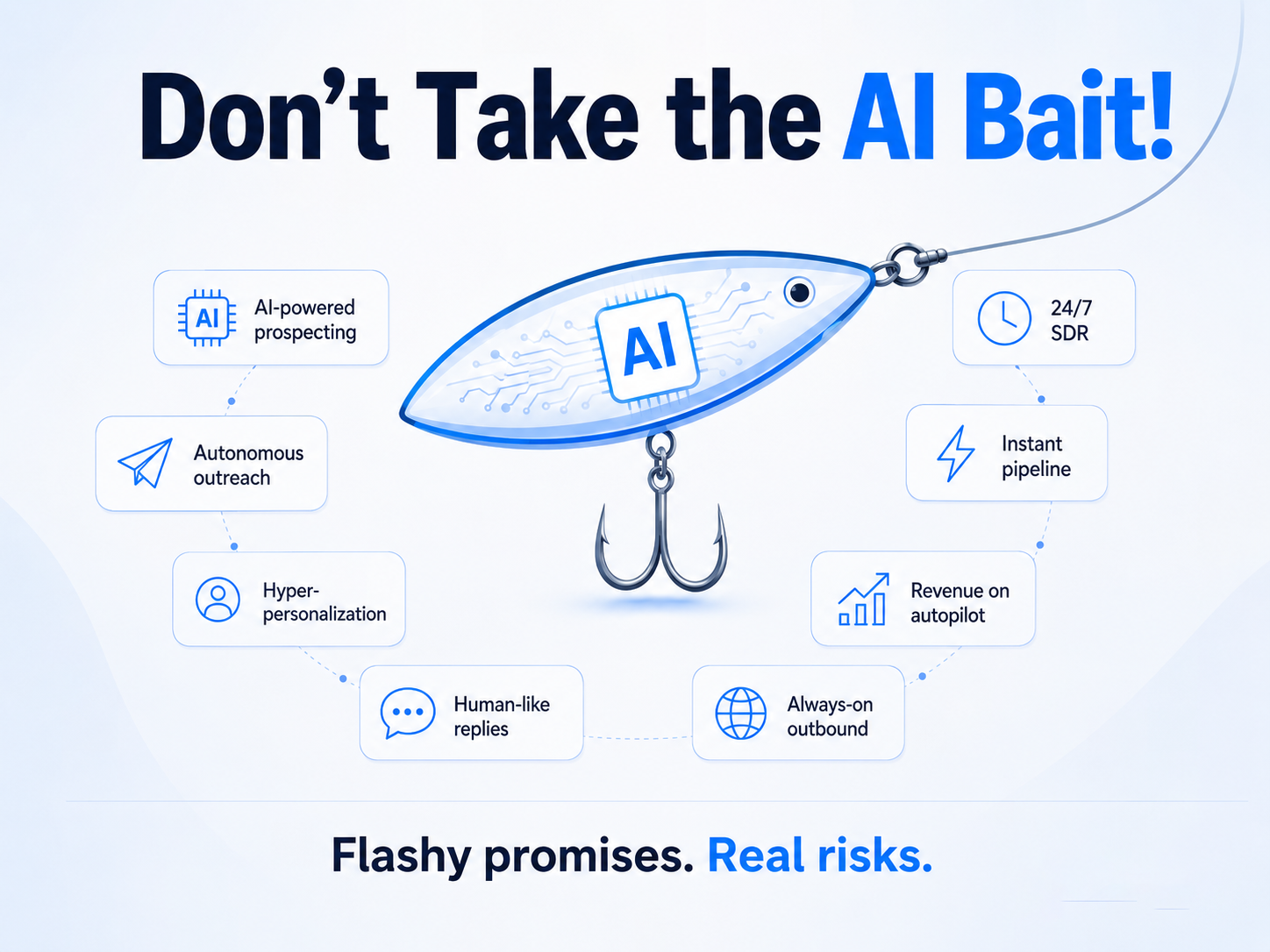
Why the Shiny-Tool Trap Catches Good Teams
There’s been an incredible scramble to add AI tools across the entire business landscape. In many ways, “scramble” doesn’t do it justice, as it’s been more of a mad dash.
Whether it’s a desperate attempt to improve the bottom line or a tactical move to add a line about being “AI-powered” to a business deck, far too many have taken a shoot first, ask questions later approach to adopt anything labeled as an “AI solution” into their workflow.
Unfortunately, we’ve seen that play out across many revenue teams. Leadership will add AI SDRs with the vague idea that it will be a “pipeline fix” without any adjustments to targeting or messaging. This is fueled by wild expectations that AI tools have a science fiction-esque ability to instantly complete any objective better than real people without any supervision or training.
Worst of all, AI SDRs are often given far more leniency than any human SDR could ever hope for. There’s no supervisor, no review cadence, and no KPIs. Many bosses are so confident in AI that they’ll simply accept its work as optimal when they would’ve already hired a replacement for a human that delivered the same performance.
That combination of decision-maker haste, unrealistic expectations, and double standards has driven much of the growing hostility towards AI in the workplace.
The Quality Cliff Nobody Warns You About
While there are macro-level issues with AI adoption, micro issues are AI’s real dirty little secret. At Zeekeo, we’ve seen that while AI can drum up opportunities for a potential sale, those opportunities convert at a much lower rate than those that are initiated by humans.
When AI SDRs are left to their own devices, the top of the funnel tends to look healthy, but that evaporates when AEs have to step in. The culprit is typically an emphasis on vanity metrics, rather than the metrics that actually translate into revenue. With a lack of guidance and training, AI defaults to simply chasing numbers rather than chasing the numbers that matter.
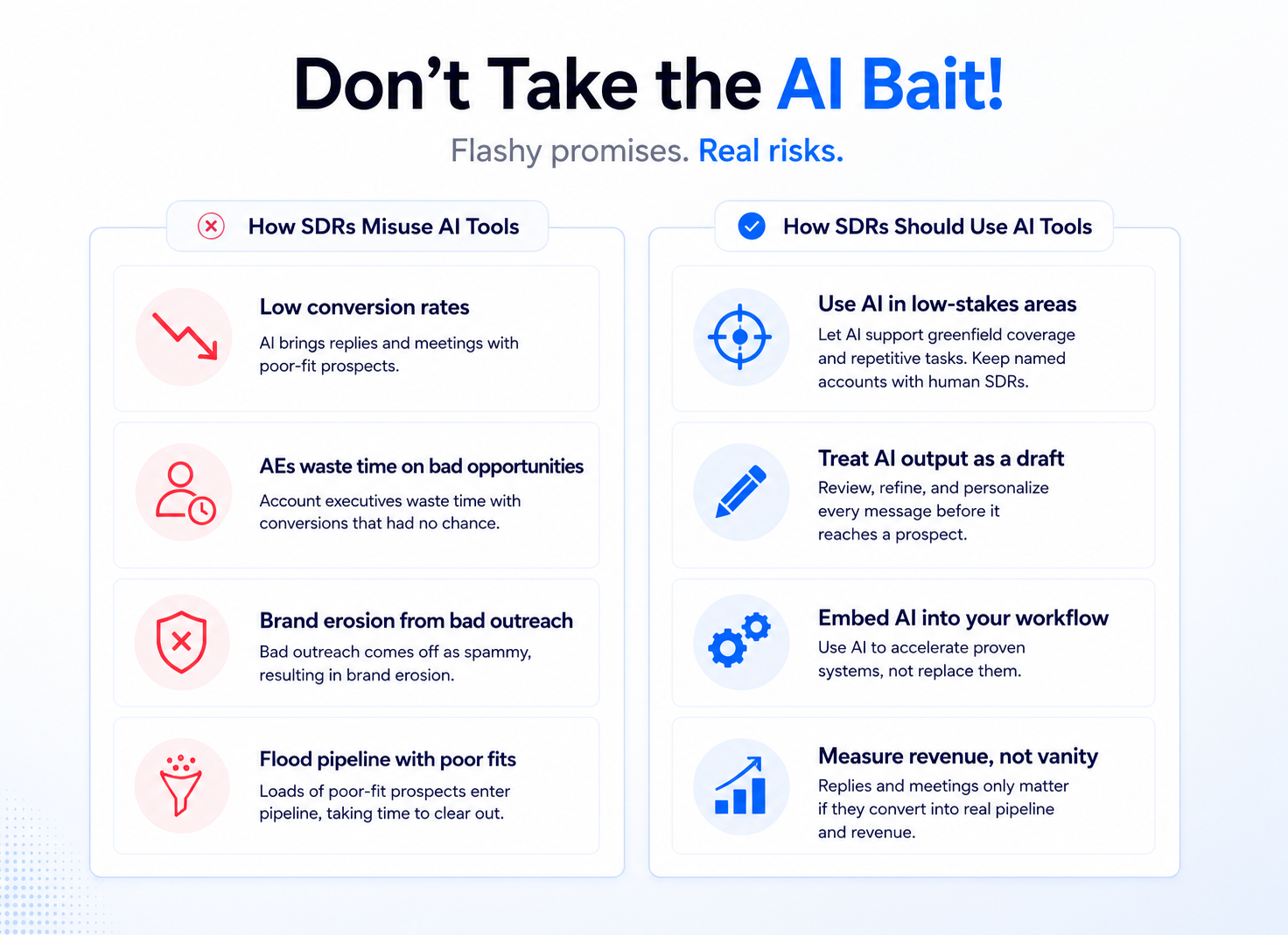
The result is account executives being handed meetings with subpar candidates. At a bare minimum, this results in the AE wasting time on opportunities they didn’t realistically have a chance of converting in the first place. In a worst-case scenario, it translates to brand erosion and a pipeline flooded with bad fits that can take a while to flush out.
This isn’t to say that all AI is bad or that AI tools don’t have a place in your team, but it’s important to know that there are real consequences in both the short and long term to bad usage of AI tools.
How SDRs Can Actually Get Something Out of AI
Here at Zeekeo, we know that AI has something to offer revenue teams. We talked about it last month, in fact! But anyone who takes the bait on an “AI solution” that replaces their human SDRs will be left disappointed.
There are ways to effectively integrate AI into your sales team:
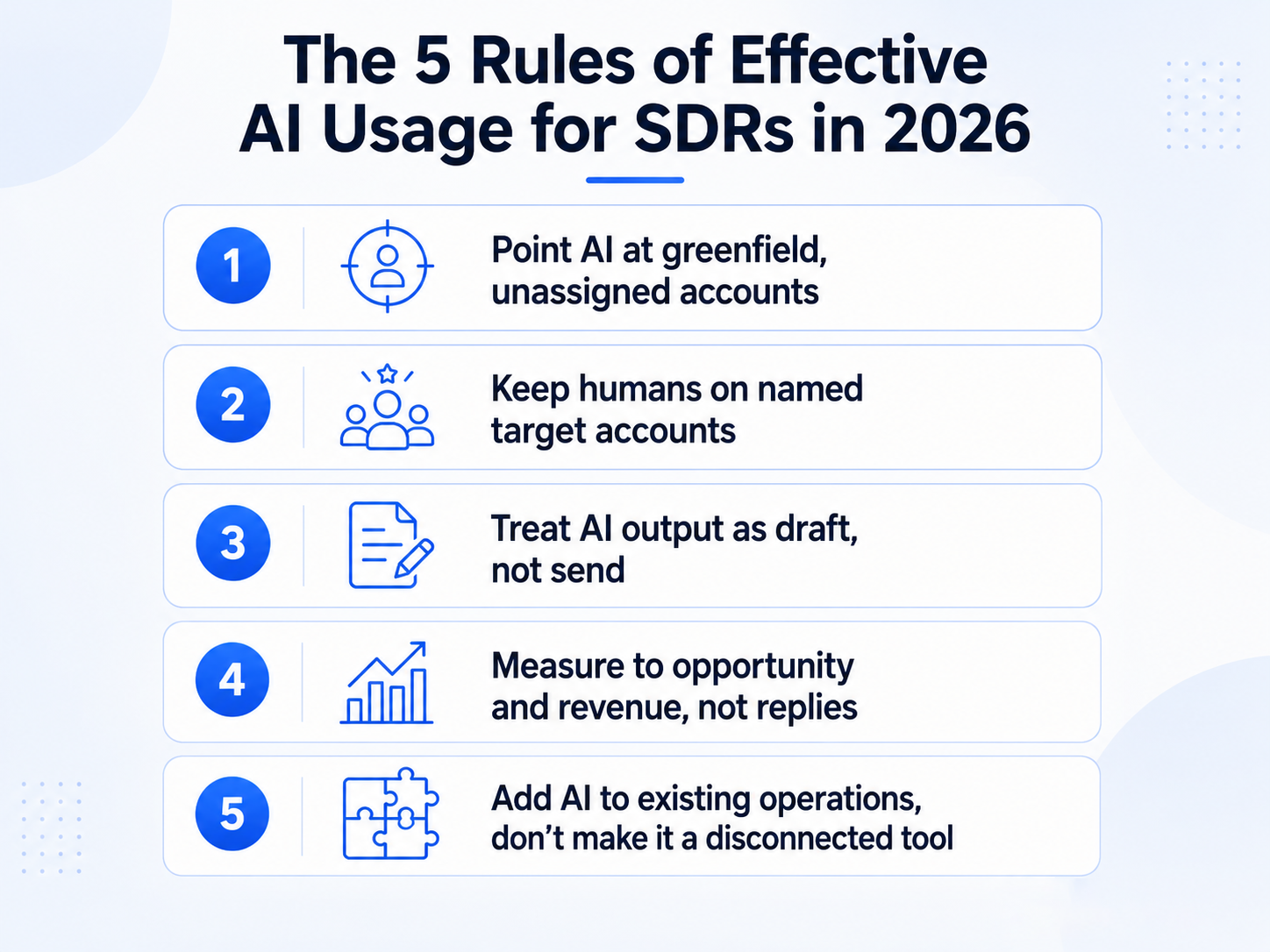
Meanwhile, AI output should be looked at as a draft, not as something that is ready for actual prospects. In the same way that we’re still barely beyond the days of six-fingered people appearing all over AI-generated photos, AI-written outreach is still easy to spot and unattractive when detected. AI output is only really passable once it’s been combed over and adjusted by a real SDR.
From a workflow perspective, it’s important to embed AI tools within your existing operational system. The “disruption” that the AI industry is bringing isn’t meant to be a disruption of the best practices and proven formulas you’ve built up over your years in business. It’s meant to accelerate what you’ve already put together.
Finally, remember that the purpose of sales, marketing, advertising, and customer success is to generate revenue for your business. AI-generated outreach might be able to gather replies and prompt some meetings, but that’s meaningless if it doesn’t actually translate to revenue. Splitting up your marketing efforts can result in negative synergy, and adding a standalone AI SDR can do the same if it’s not integrated properly.
Build the Operating Model Before You Buy the Tool
AI tools have a lot to offer your sales efforts, but you need to carve out a niche for them first and keep a close eye on their effectiveness.
Remember that an AI system that isn’t particular about who it’s selling to or when it’s selling is just a spambot. Define your ICP and the signals that should trigger outreach first to make sure that you’re not just cluster bombing inboxes before setting your AI tools on the loose.
From there, don’t hand a monkey a hammer. Monkeys are fun. Hammers are important tools. But when combined and left unattended, it’s a recipe for disaster.
A human hand is needed to guide AI tools to be effective. Otherwise it’s just a liability to your work. Decide the human-in-the-loop checkpoints up front to keep an eye on what’s happening. If the AI tool isn’t living up to your expectations, don’t insist upon using it and don’t get caught in a sunk cost fallacy. Give the AI tool some time but if it’s not producing numbers, then look elsewhere.
The winners treat AI as leverage on a disciplined system, not a shortcut around one. Book a Zeekeo Launchpad strategy session and we will pressure-test your outbound operating model before you scale AI on top of it.
Share this post: