

Albert Einstein is famously misquoted as saying “if the facts don’t fit the theory, change the facts.” While that’s a bit of a nefarious idea, something that sales and marketing teams might discover is that this can happen in real life, unintentionally.
In theory, your team can meet or exceed its KPIs and break quarterly records. But in fact, the company can still fall short of revenue or sales expectations. If that’s happening in your business, it’s probably time to update your outbound metrics.
Most outbound teams track vanity metrics that don’t inherently translate into money. Open rates and connection counts are important to keep track of, but they don’t equal revenue. Modern outbound marketing requires smarter, modern metrics that translate into growth. Here are the numbers that you and your team should actually track in 2026 and beyond.
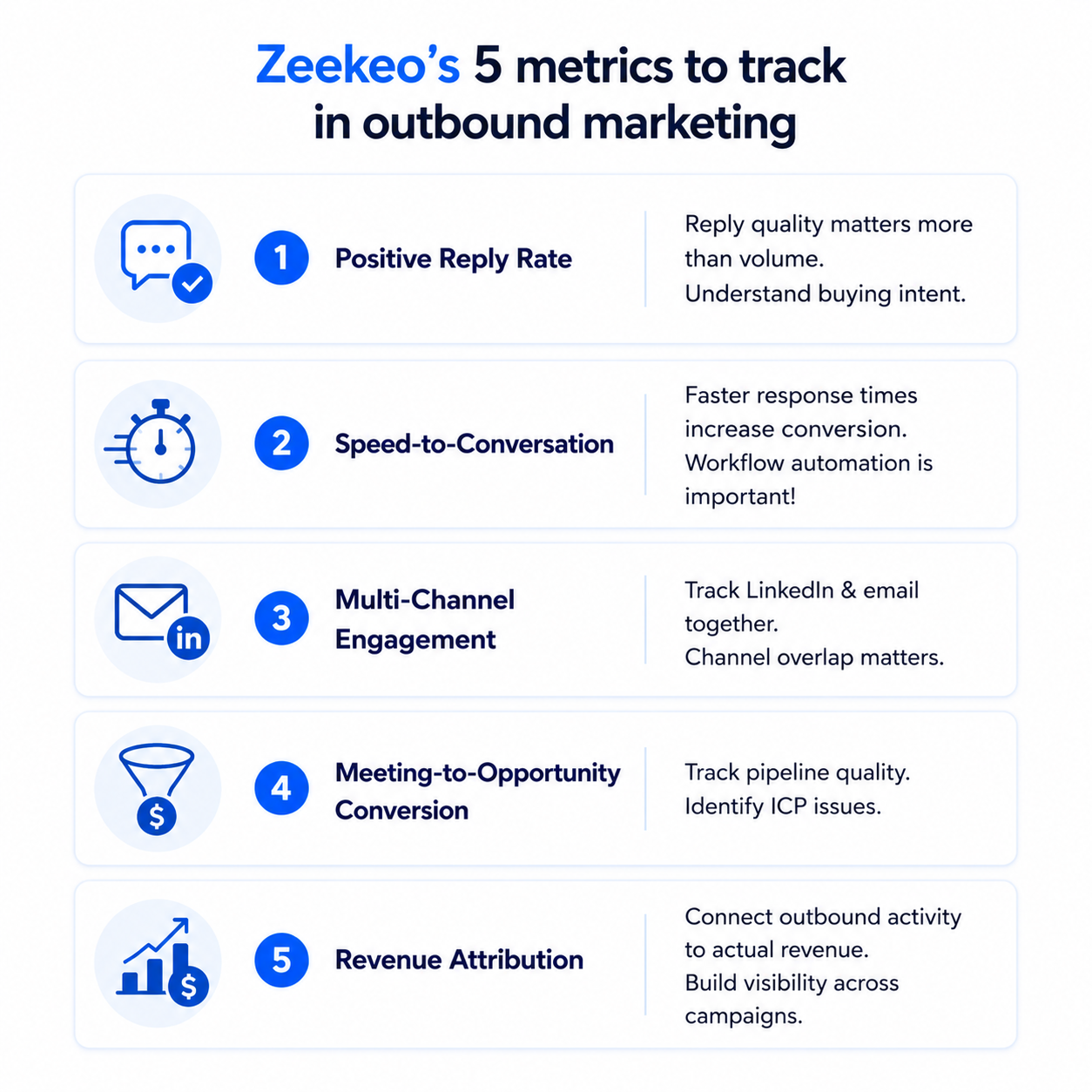
Metric #1 – Positive Reply Rate
This one almost goes without saying, but it’s too important not to discuss. Tracking the positive replies garnered by your outbound marketing is important at every level of your business. The key distinction between this metric and what your team might currently be doing is distinguishing between a “positive” reply and something else.
A one-word email that reads “unsubscribe” isn’t a positive reply and isn’t helping your business’ bottom line. Tracking these, and even potentially interpreting them as a good thing, is a practice many businesses still adhere to. So what makes for a positive reply?
While the ideal response is “sure, sign me up, here’s my credit card information,” there are other, more realistic responses that can also be chalked up as a positive reply:
- Actionable interest
- Ex- “We are looking for something like this.”
- Exploratory responses
- Ex- “So who are some of your clients?”
- Integration checks
- Ex- “Does this work with our existing tools?”
- Pricing inquiries
- Ex- “How much does this cost?”
- Referrals and delegation
- Ex- “I’m forwarding this to another department.”
- Deliberation and contemplation
- Ex- “Let’s circle back to this in a month.”
Each one of these is a potential step down the road to conversion or opens the door for building a relationship. Either way, these are all clear positives.
Metric #2 – Speed-to-Conversation
Earlier this year, we discussed how bad follow-up is a revenue leak in the same way that bad billing is. A big part of that is how buying practices have shifted such that a speedy reply to outreach from SDRs is extremely important. It’s important enough that we’re bringing it back up here.
Speed-to-conversation is key and there are lots of numbers that back this up:
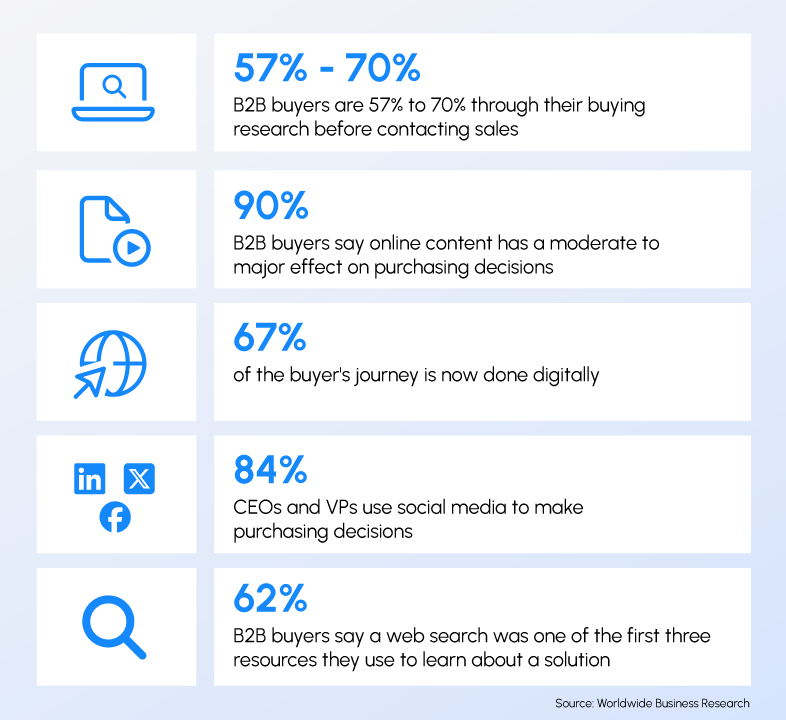
When there’s outreach, there’s a high likelihood that the prospective customer is on the cusp of making a purchase. If they make a call and nobody answers, getting cold feet is understandable.
This is an area where Zeekeo helps businesses. Smaller companies, and startups in particular, often have limited human resources. Zeekeo helps maintain a healthy pipeline flow for you with its staff of dedicated sales and marketing specialists. We know how much of an impact having 24/7 availability has on customers, and we can help your business with that. Book a call if you’d like to discuss what Zeekeo can add to your sales operation.
Metric #3 – Multi-Channel Engagement
Email remains one of the most important tools in outreach marketing, but it’s got some company. Tracking engagement across both email and social media channels, specifically LinkedIn for most businesses, is more important than ever.
Social media marketing and email marketing are both important but they have their respective weaknesses. Email marketing is the preferred method of communication with brands for a strong percentage of consumers globally, per Emarketer, far ahead of any alternative.
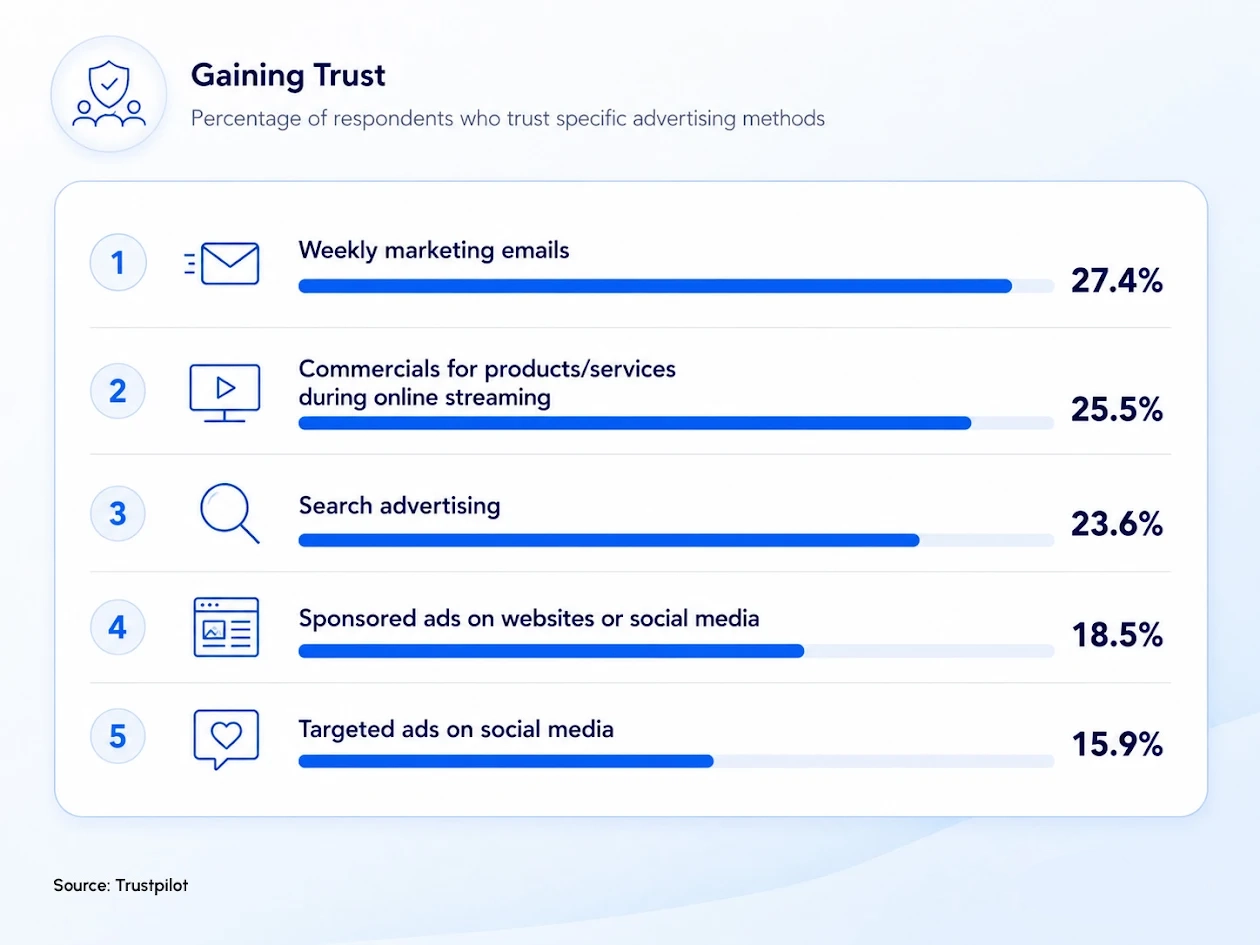
The negative aspect of email marketing is that clickthrough is universally low across all business types, with Forbes’ estimates seeing the best-performing industries topping out at under 3% clickthrough. Though the ease of distribution means there’s still a very strong return on investment, there’s a low chance of making an impression on the prospective buyer.
It’s the opposite for social media marketing. Different platforms offer effectively guaranteed impressions, but users’ trust in these ads is significantly lower. Having that balance of being able to increase brand awareness while still meeting with prospects on their preferred terms is critical.
That’s not even to speak of the importance of maintaining multiple channels. As mentioned, consumers are doing much more research these days than they did in decades past. If a would-be buyer can’t find your business’ website or social media profiles after they’ve received an email from you, there’s nothing to distinguish you from spam.
Metric #4 – Meeting-to-Opportunity Conversion
Many teams look at meetings as one of their most important metrics. That’s not an ideal approach.
Meeting-to-opportunity conversion is the best statistic there is for gauging your pipeline quality. Knowing how many of your discovery meetings translate into actual qualified opportunities is crucial for determining whether your sales team, product, and ideal customer profile are aligned properly.
Simply put, if your M2O is low, there’s a good chance that something is off. Though it could be an issue with team performance, there’s also a strong likelihood that the product isn’t the best option for the consumers you’re marketing to.
Regardless, a meeting that doesn’t translate into opportunity is ultimately a waste for both your team and the people on the other end of the table. At the very least, looking at M2O over the pure meetings count is a good way to raise efficiency.
Metric #5 – Revenue Attribution
Sales, marketing, customer success, and everything else we do is designed to drive revenue. But once revenue is coming through, it’s important to figure out where the tipping point was for a new customer.
By directly mapping outbound efforts to closed-won deals, teams can move beyond vague levels of success. Revenue attribution creates a clear, verifiable link between the effort spent on prospecting and the dollars and cents those efforts generated. When done properly, this turns a marketing operation into an actual engine for growth. It also gives the sales team the chance to identify opportunities to increase efficiency.
If a tool, partnership, or practice isn’t landing in your outreach campaigns, there’s reason to consider overhauling or even pruning it. Meanwhile, if something is making a big positive impact on customers, it could be worth investing further.
Better metrics mean better decisions
While there isn’t a “one size fits all businesses” approach to outbound marketing, better reporting leads to better decision making regardless.
Outbound teams should optimize for conversations and revenue, not busywork. This lets teams increase their efficiency and effectiveness, while potentially cutting costs.
Zeekeo can help your business improve its reporting. Our experts in sales and marketing can help you build a smarter pipeline. Book a call now to find out what we can do for you.
Subscribe to our blog
Lorem ipsum dolor sit amet, consectetur adipiscing elit. Pellentesque eget nunc finibus, venenatis purus eget, porta enim. Fusce a tempor diam, sed consequat purus.

Stefan Bako
Stefan Bako is the Customer Success Lead at Zeekeo where he helps businesses build stronger pipelines, create meaningful customer relationships, and turn growth strategies into measurable results. Working closely with clients, Stefan combines technology, data-driven insights, and a customer-first approach to help organizations achieve sustainable revenue growth. Outside of work, Stefan is passionate about travel, exploring new destinations with his family, hiking scenic trails, and spending time outdoors with his dog. He enjoys discovering new perspectives, whether through business, adventure, or the people he meets along the way.