





An overly traditional, outdated approach to business could be hurting your bottom line. The problem with modern outbound is not that companies lack activity. It is that activity is scattered across teams that are measured differently, operate separately, and rarely share a single revenue system.
Today’s sales environment prioritizes personalization, speed, and consistency. A restrictive hierarchy or department structure that slows down your staff and gives them disparate priorities will inevitably hold them back. Worse yet, it could even set them up for failure.
The solution is a modernized revenue team. Syncing the workflow and goals of your marketing, sales, and customer success departments can improve both efficiency and effectiveness, while also improving the work environment. When done effectively, this integration is a win-win for both your business and your team.
The KPI Problem with Traditional Structures
The strength and value of a flat leadership structure are old news at this point. Rather than gumming up the works with a telephone game of middle managers, expanding the scope of an employee’s duties and evenly spreading responsibilities across a team just makes sense. But while many businesses have effectively dealt with unnecessary vertical structures, many are still too big horizontally.
There’s no better example of this than the revenue side of your business.
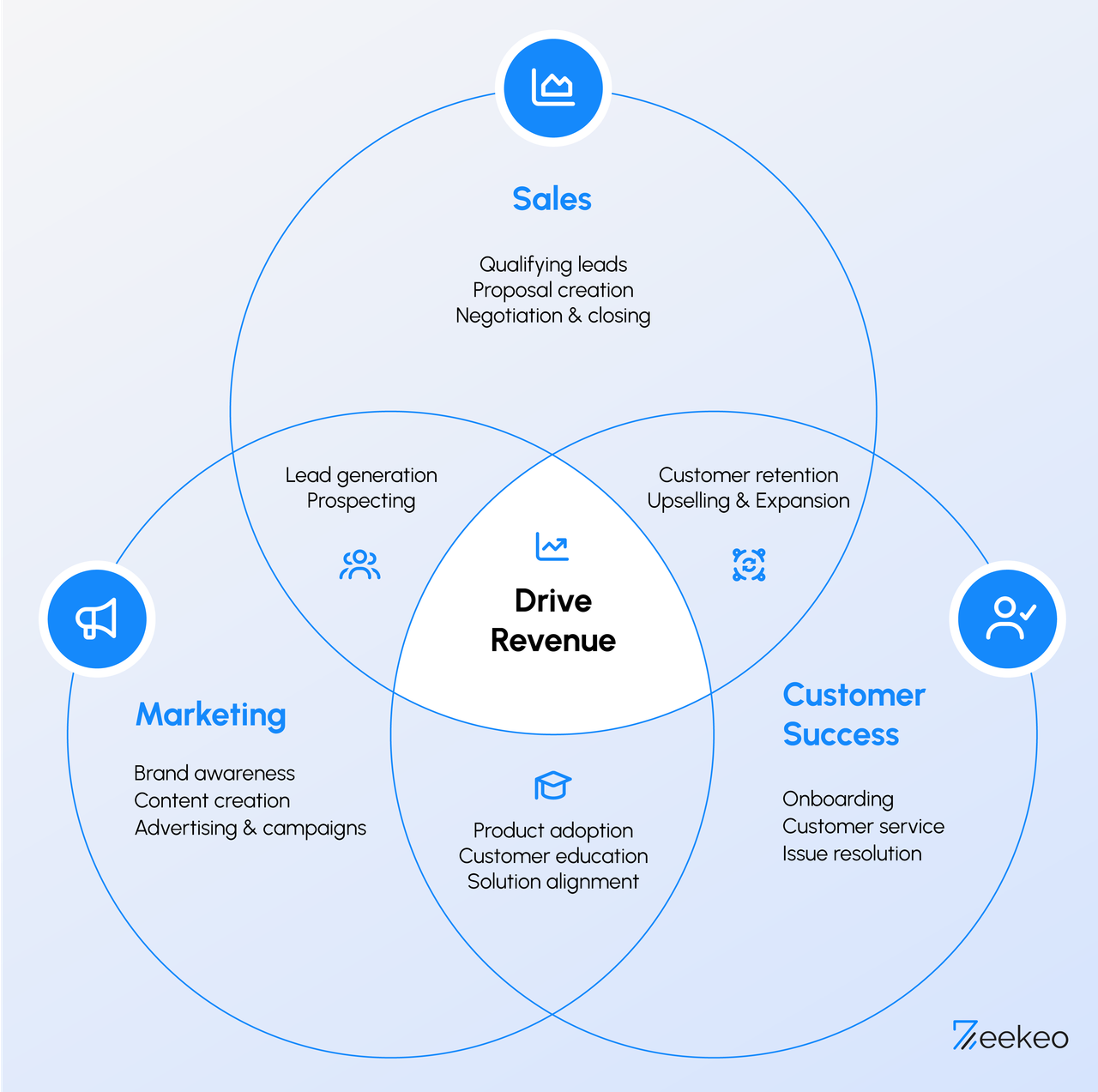
Marketing focuses on leads, driving awareness of your product, and mobilizing prospects for the sales department. The sales department then needs to talk with those prospects and close deals to actually bring in revenue. From there, it’s on the customer success team to retain those customers in the long term and encourage repeat business.
These three teams have different duties and methodologies, but all of them have the same goal: making money for your company. While keeping these teams separate can work, having no individual owning the full revenue journey inevitably holds things back. Similar to Game of Thrones’ explanation for why one can be a bigger number than five, having one revenue team with one purpose can beat out three departments that just happen to have some overlapping goals.
What Modern Revenue Teams Look Like
One of the toughest parts of running a business is ensuring that all departments are heading in the same direction, toward the same objective. A singular revenue team can unite a sizable portion of your staff in this way.
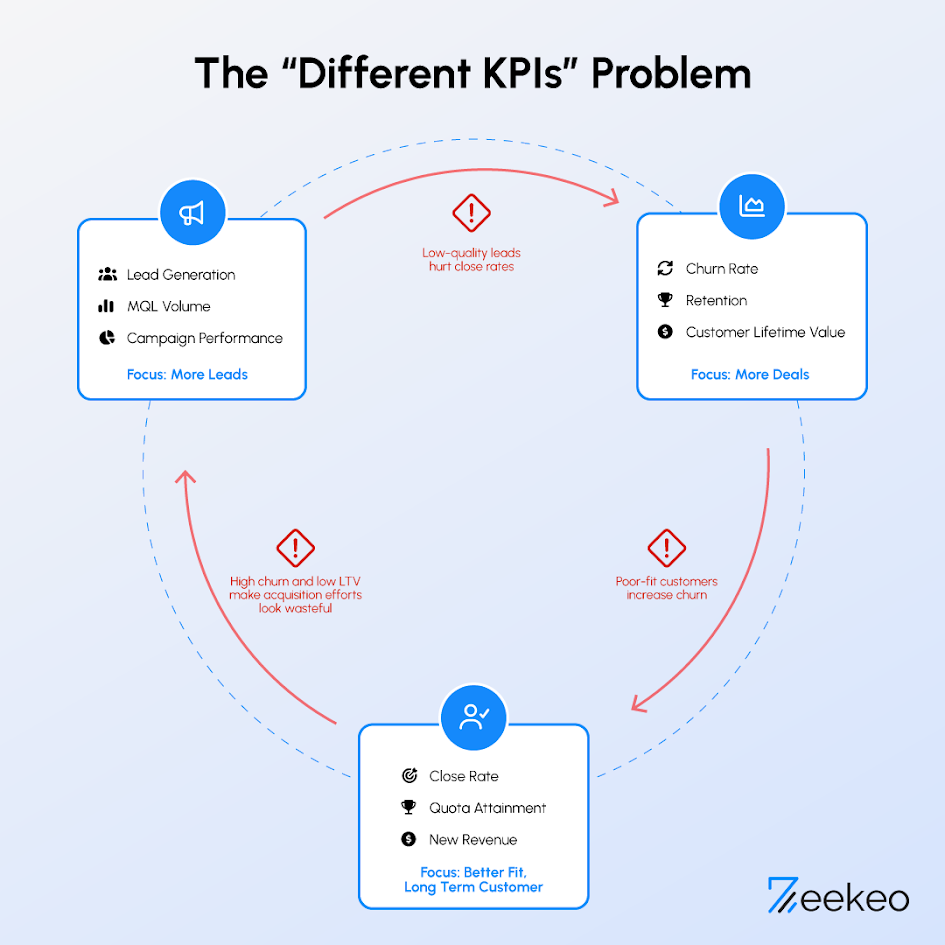
When marketing, sales, and customer success teams are separated, there’s little commonality between their KPIs and reporting methods. What’s more, these departments can unintentionally make each other look bad when they have different expectations and focuses regarding churn rate, customer lifetime value, lead generation, and so on. If the marketing team brings in loads of low-quality leads, the sales team can look bad for not closing deals. If the sales team closes deals with poor-fit customers, customer success representatives may seem incompetent when those customers walk away.
Bringing these teams together with shared KPIs, unified reporting, and a common goal fixes much of this.
Not only that, but there’s something to be said for synergy. You’ve brought together a strong team of people to help your business grow, so why not let them actually come together and work as a team?
Keeping your sales, marketing, and customer success teams together allows them to gel, feed off each other’s successes, and be more nimble when dealing with campaigns and other large endeavors. Even if different members of the team are specialists in one of these fields, that expertise doesn’t vanish when they’re let out of their silo.
The Role of Managed Outbound Services
Adding managed outbound services to these improvements can amplify the gains of a united revenue team even further. These external services can act as execution partners who help your staff accomplish those new goals even faster.
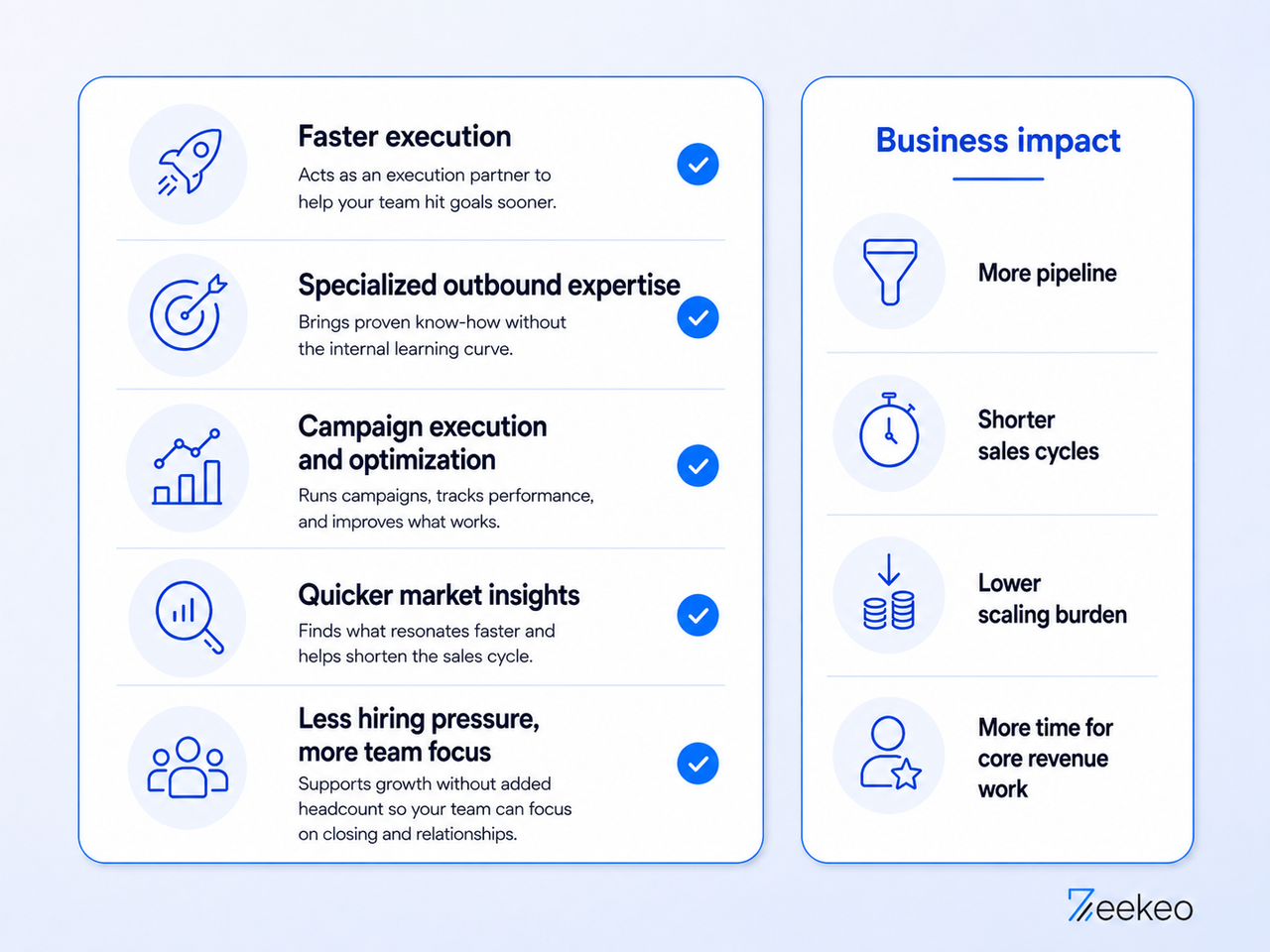
Managed outbound services offer all manner of businesses specialized expertise that lets them fill their pipeline. Revenue teams can blaze their way past the long learning curve often associated with internally restructuring outbound marketing practices.
Rather than having a lengthy trial-and-error period, services like Zeekeo have a tested and proven framework that can quickly deliver results. We’ve been able to step in and make an immediate impact with partners.
We do this by strategizing, executing campaigns, tracking performance, and making any necessary adjustments without being bogged down by other responsibilities. Shifting the burden of optimization to specialists allows businesses to quickly decipher what resonates within their market and shorten the sales cycle.
Just as importantly, this helps relieve internal hiring pressure.
Your teams want to succeed and when they succeed, they want to succeed on a greater scale. That’s a good problem to have, but many still equate headcount with scalability. New hires can improve a business, but expanding can be a risky and time-intensive process. By comparison, adding an outside growth partner yields quicker results at a lower cost. Having an outside partner lets existing staff focus on closing deals and maintaining client relationships without having to sift through potential leads and identify legitimate prospects.
Zeekeo has helped clients across a number of industries in this way, helping to drive and accelerate growth. Book a meeting for an audit or to discuss what we can bring to your business today.
Why Alignment Increases Revenue Efficiency
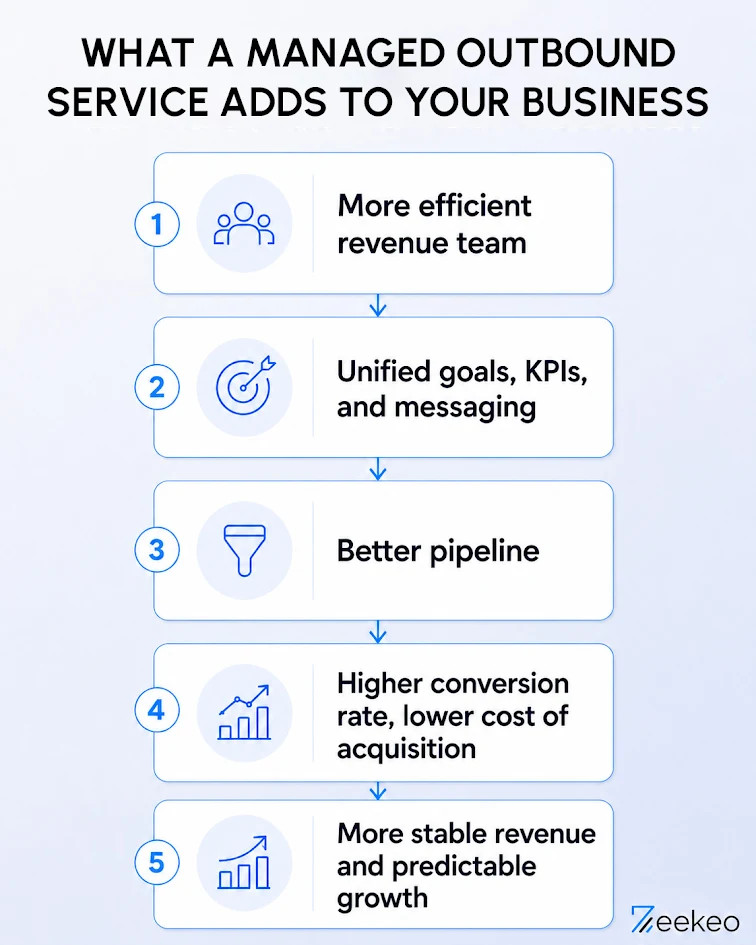
When sales, marketing, and customer success teams are fully aligned, it naturally leads to increased revenue efficiency.
Having these teams synchronized removes the issues that can gum up your funnel with poor-fit leads and result in a clunkier sales operation. Cirrus Insight estimates that an overwhelming majority of leads don’t translate into customers. Reducing that number for your team through improved alignment can make a huge difference, saving them the time of dealing with a bad prospect and giving them more time to work with a good one.
Better pipeline quality means more customers who are specifically interested in your product, which translates to better conversion rates and a greater potential for repeat business. All this reduces customer acquisition costs and streamlines the process for your team. And at the top of the company, ironing out these issues gives leadership better revenue forecasting, making for more predictable and sustainable growth.
Though the traditional, siloed team approach worked in the past and can work reasonably well today, businesses that align teams around revenue are outperforming their competitors. Today, efficiency is critical in business and while many businesses have cut out unnecessary verticality in their structure, splitting up marketing, sales, and customer success teams introduces unnecessary horizontality.
That’s especially true for outbound marketing. Success is no longer defined by volume, whether in outreach or responses. Orchestration is the new key to a successful, revenue-generating operation.
When it comes to building a scalable revenue team, Zeekeo can help. Zeekeo offers a full-stack outbound marketing program that can help fill pipelines for businesses of any size. Book a call now to discuss what we can do for you.
Share this post: